

Samsung and Apple have won the smart phone war — and we have lost
Samsung and Apple take won the smart phone state of war — and we take lost
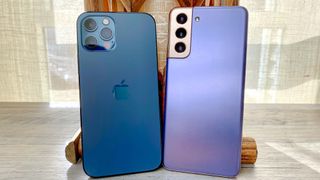
The smartphone marketplace in the U.S. basically boils downwardly to three companies — Apple, Samsung and everyone else. And everyone else could be most to shrink.
Recently, a report claimed that LG might leave the smartphone concern, citing years of losses for that division of the electronics giant. That the written report surfaced presently after LG fabricated a splash at this year's CES showing off a rollable phone suggests how hard information technology is for smartphone makers non named Apple and Samsung to capture sustained interest from U.S. phone buyers.
- Samsung Galaxy S21 vs. iPhone 12: Which telephone wins?
- Galaxy S21 tips: Enable these nine features first
- Plus: It just got easier to compare RTX 30 laptops — here'south how
The ups and downs of device makers would normally be of little interest to those of united states who but desire to discover the best telephone out there. Who cares if Phone Maker Ten is struggling to break through then long as I tin pick upwardly a new iPhone or Galaxy S model every so ofttimes?
Merely even companies with the track records of Apple and Samsung need rivals to push them frontwards. And you could argue that the 2-horse testify that is the U.South. smartphone market place these days is allowing a feeling of sameness to creep into the latest flagship devices.
Take Apple'due south decision a few years back to stop placing a headphone jack in its new iPhones. Samsung resisted that move with its own flagships — until it didn't. Now, you lot won't discover a Galaxy Due south or Milky way Note model with a headphone jack. The contempo Galaxy S21 models all shipped without microSD bill of fare slots, something Apple tree's e'er left out of its iPhones. And later mocking Apple's decision to not include a charger with the iPhone 12, Samsung did exactly the same thing with the Galaxy S21.
To be sure, you lot're not going to misfile the iPhone 12 with the Galaxy S21 whatsoever time soon. Just some of the differentiating factors between the two smartphones brands are starting to disappear.
The Apple-Samsung duopoly by the numbers
No one would dispute the fact that Apple and Samsung are the leading telephone makers in the U.S. According to numbers from Counterpoint Inquiry, in the third quarter of 2020, Apple enjoyed a twoscore% market share to Samsung's 30%. The next biggest actor was LG, with a thirteen% share, while other phone makers made up 11% of the market place.
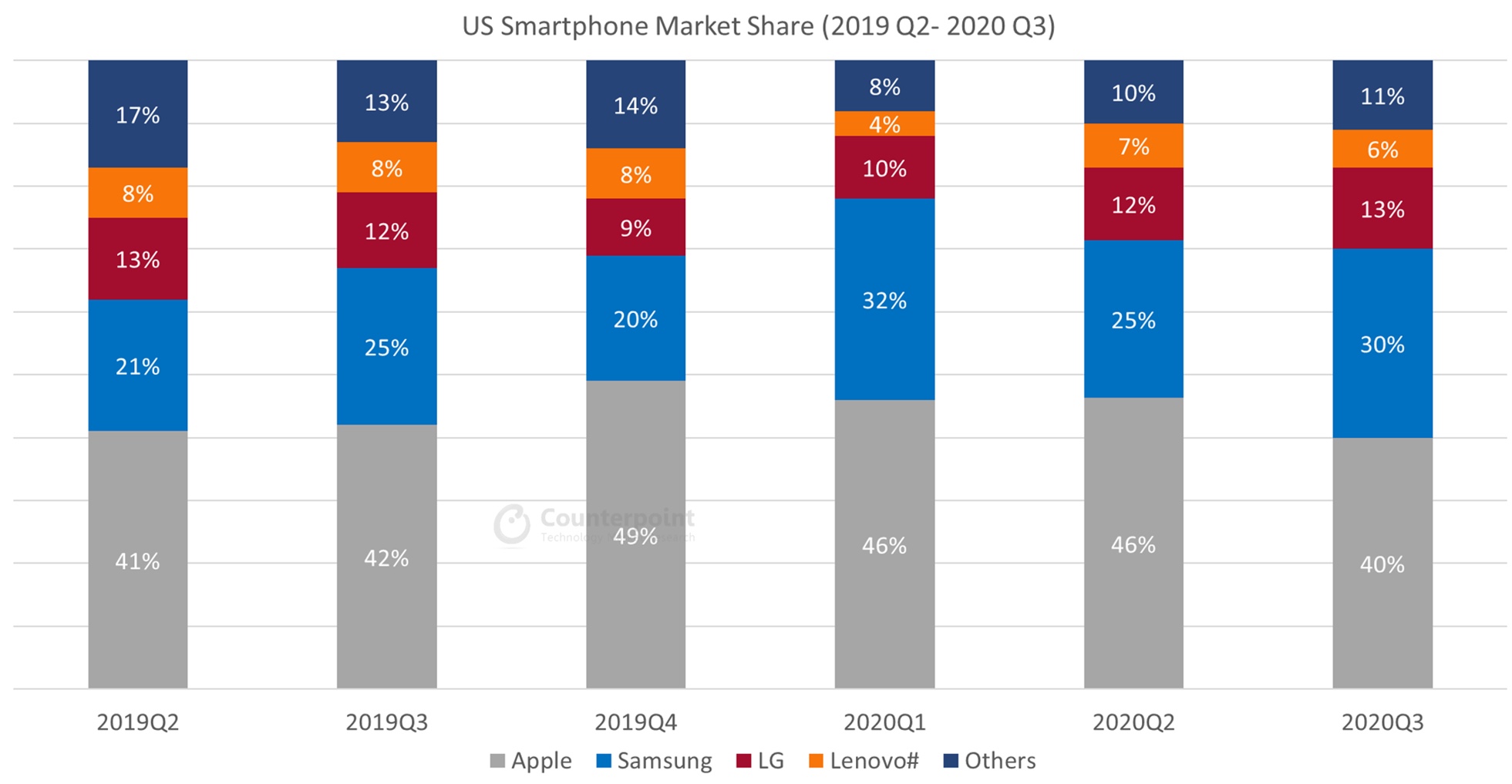
We don't have fourth quarter numbers yet, merely you'd figure that Apple'south share would only grow, given that the company enjoyed record phone sales the last three months of the year fueled by the iPhone 12's release.
"Smartphones are a mature production category, and the U.S. market has been in a duopoly with Apple and Samsung for years," said Avi Greengart, founder and lead analyst for Techsponential. "This is not platonic for consumers, but both companies are under considerable competitive force per unit area in markets outside the U.South., and that helps protect consumers from stagnation."
Handset OEMs compete on a global calibration, and contest remains good for you.
— Tuong Nguyen, Gartner
Indeed, when you have the unabridged world into business relationship, Huawei is the second largest phone maker, wedged between Samsung and Apple tree. And other companies combine to concord the largest piece of the global market, according to numbers from research business firm IDC. "The bigger moving picture is that handset OEMs compete on a global scale, and competition remains healthy," said Tuong Nguyen, a senior principal analyst with Gartner.
At that place's another factor hanging over the U.S. phone market place, where a lot of people withal buy their devices through the phone carriers providing their wireless service as opposed to picking upwards the best unlocked phones. "U.Due south. carriers as well play a strong gatekeeper part; as much as they would like alternatives to Apple tree and Samsung, they accept likewise been unwilling to open up their shelves to the churn of Chinese vendors," Greengart said.
Contest among budget phones
Apple and Samsung may command the lion'south share of attention for people looking for flagship phones, but at that place's i segment of the market where they're overshadowed by other players. Midrange phones have been lively in recent years, every bit phone makers try to attract budget-minded shoppers.
"We are seeing more than options at lower price points," Greengart said. The iPhone SE is Apple's cheapest device at $399, simply Apple hasn't gone whatsoever lower with prices, Greengart added while "vendors similar TCL, OnePlus, and Google are trying to expand the marketplace for mid-tier devices."
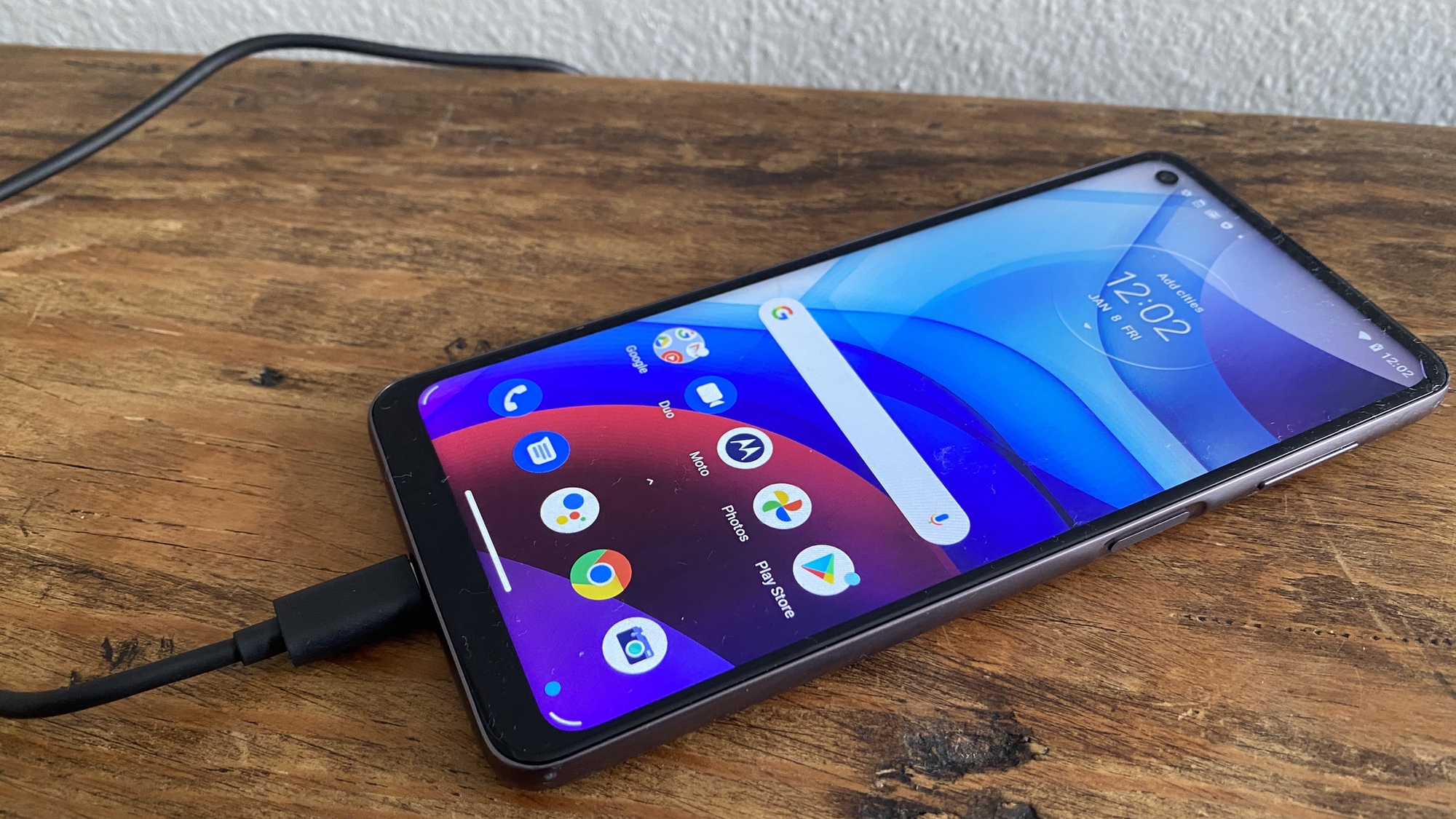
Motorola and Google have been especially successful at making waves. Motorola'south affordable G Series of phones have fatigued a lot of interest from consumers by focusing on specific features like battery life in the case of the Moto G Power. Google's Pixel flagships had failed to attract much of an audience until the company rolled out A series phones — first the Pixel 3a, then the Pixel 4a — that delivered high-end camera performance at a lower price.
That's been the secret for telephone makers looking to escape the long shadow cast by Apple tree and Samsung. Merely how many premium features tin you squeeze into a phone while keeping the overall toll competitive to what the market leaders charge? OnePlus' unabridged business model seems designed around this entire signal, both with its flagships but peculiarly with the affordable OnePlus Nord phones it started rolling out last year.
Tin can phone makers still introduce?
That's a sign that there'southward room for telephone makers to found their ain devices, even if the iPhone and Galaxy flagships swallow a lot of oxygen in the smartphone space. And information technology may simply push Apple and Samsung to keep finding new features and enhancements for their phones, even if the smartphone market is a pretty mature one at this point.
Neither company wants to be labeled equally showing incremental improvement from their previous models, nor be a step or two backside the contest.
— Ramon Llamas, IDC
"Both [Apple and Samsung] repeatedly highlight how much faster their processors are, how much bigger and brighter their screens are, and how much more developed their cameras are," said Ramon Llamas, research manager for mobile devices and AR/VR at IDC. "Neither company wants to exist labeled equally showing incremental improvement from their previous models, nor be a step or two behind the contest."
Phone displays are a practiced example of where the market leaders have kept trying to drag the user experience, especially in the case of Samsung. Last year's Galaxy S20 introduced 120Hz refresh rates to Samsung's flagship lineup and subsequent releases have seen the visitor add dynamic refresh that adjust depending on what task you're performing.
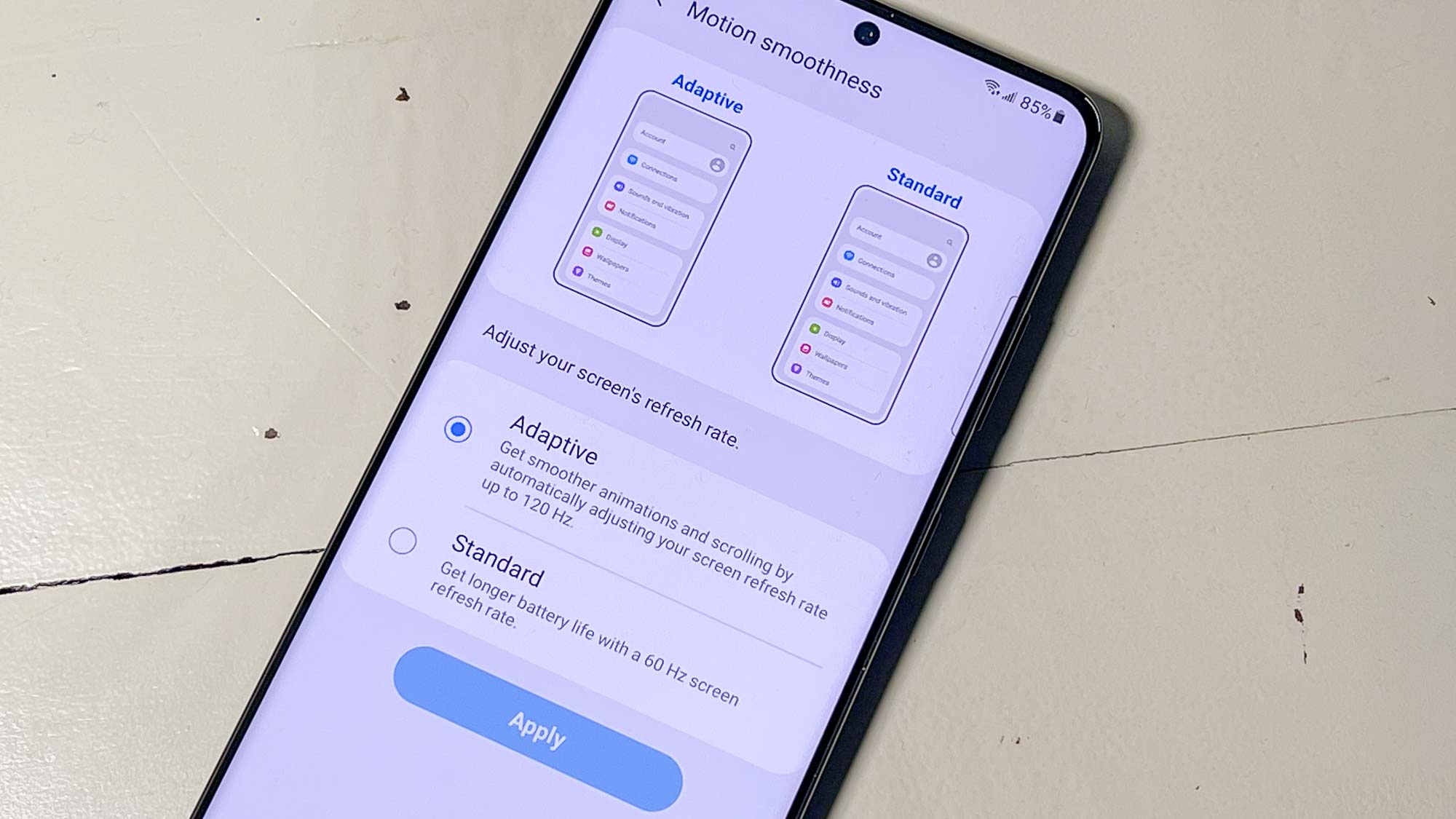
Faster refreshing displays hateful smoother scrolling and a better overall feel, which is pressuring Apple to respond in kind. Indeed, fast-refreshing displays are reportedly on the feature list for the iPhone 13 slated for release later this year.
Phone makers have also been trying to leave their mark with cameras. Recent Galaxy phones have seen Samsung upwards the megapixel rating on its primary sensor — the Galaxy S21 Ultra features a 108MP camera equally its primary shooter — while also upping the zoom capabilities of its camera phones. Apple tree, in plough, has put an emphasis on software improvements, introducing and enhancing features similar Smart HDR, which enhances shots you take even in challenging lighting, and Deep Fusion, which calls out the finer details of photos.
Of course, you lot could make the case that the camera improvements in the iPhones and Milky way devices might not take come equally rapidly without Google applying the pressure to Apple and Samsung. While the Pixel phones may not savor a large slice of market share, they've undoubtedly introduced enough of new capabilities to mobile photography, with the latest Pixels ranking amidst the best camera phones. Apple tree and Samsung would certainly be motivated to upgrade their cameras every year without the Pixel, simply the extra contest certainly doesn't hurt.
The outlook for smartphone competition
That's why consumers tin be forgiven if they're a little bit worried that the dominance of Apple and Samsung might slow the pace of innovation in the smartphone market. Advances will however happen, simply information technology's a question of how rapidly they'll come without the threat of extensive competition.
"We've reached a point in this market where the innovations have been coming incrementally," Gartner'due south Nguyen said. "The side by side big use case/awarding is what will change this dynamic — much in the same way that smartphones inverse the mobile phone market in a substantial style. The million dollar question is what the application or combination of applications will be."

Source: https://www.tomsguide.com/news/samsung-and-apple-duopoly-is-phone-innovation-dead
Posted by: acostaskint1954.blogspot.com
0 Response to "Samsung and Apple have won the smart phone war — and we have lost"
Post a Comment